
Summary: The goal of the strategic planning conferences in 2027 is to assist CEOs in planning the future for their business in light of the new opportunities and risks that AI presents. Executives can improve business decision-making and create flexible business strategies by focusing on real-world discussions, tangible results, and the ability to harness cross-industry achievement. Conference agenda research supports leaders in choosing learning and networking events that are relevant.
A business can meet its quarterly targets and still lose ground to competitors. The problem often begins when leadership teams continue following plans built around outdated market assumptions. According to the 2026 Global CEO Survey by PwC, 42 % of the CEOs pointed to technological changes, such as AI, as a key concern. As the executives begin planning for the new year, CEOs take time to discuss new risks, re-evaluate investments, and “strategize” organizations for new business opportunities in 2027.
1. AI strategy and ROI
Enhancing the old concept of ‘technology choice’ to AI investment. CEOs need to establish which apps can add to productivity, enhance the customer experience, and drive real returns on business investment.
AI adoption, implementation cost, workforce readiness, data governance, and return on investment will be discussed in panels at the best leadership conferences in 2027. Leaders may have a conversation about how to differentiate between promising applications and costly experiments, as well as setting up performance metrics prior to deployment.
The main question now being asked is how to get from testing the AI tools to using them in operations without falling into the net of security breaches, accountability issues, and financial misuse.
2. Risk and Resilience
An unexpected downturn in the economy, cyber breach, disruption to the supply chain, or change in regulation can all throw businesses off course and make for an unpleasant surprise.
Scenario planning, contingencies, supplier diversification, and business continuity are the areas to consider regarding business strategy discussions. CEOs can look at vulnerabilities as they might become a crisis and decide at what point a move needs to be made.
Leadership teams should create flexible plans that have criteria set that enable them to make flexures to the budgets, operations, and growth targets when they see a disruption.
3. Capital Allocation
All big bucks have to contend with other priorities. Promoting in a new market, upgrading technology, talent, and resources for specialization and consolidation of existing activities all involve a cost.
Panels consider the factors executives take into account when deciding which investments to choose from a portfolio, the process they use for calculating risk-adjusted returns, and when to pause and turn underperforming initiatives into desertion. Speakers will also talk about the best way of balancing short-term profitability with long-term capabilities.
These conversations aid leaders in defining priorities for investment and allocating resources to those that will achieve measurable strategic objectives.
4. Talent and Leadership
Business tactics rely on individuals who can accomplish them. Whether or not an organization realizes its goals can be influenced by a lack of skills in key areas, as well as succession, retention, and expectations of workforce members.
Topics such as succession planning and development of executives, cross-functional partnerships, and preparation of the workforce for the use of AI are useful in conferences. CEOs should also review their organizational structures for a quick and clear-cut decision-making process and accountability.
Leading conversations shift meaning and become more valuable when they relate workforce planning directly to business priorities rather than to talent management, as a one-off administrative activity.
5. Growth and Market Expansion
While entering a new market can lead to revenue, business growth can also open a company up to new customers' expectations, regulations, and the competition that it is unaware of.
During the conference, sessions will focus on market validation, positioning, partnership strategies, and ways to consider expansion opportunities. Leaders may do a comparative study on organic growth, strategic alliances, and diversification options.
It is their goal to determine the areas in which a business can be successful, the abilities necessary for success, and any assumptions that must be verified before spending major resources.
6. Innovation and Cross-Industry Cooperation
The other factors beyond a company's current business are going to be a strategic planning help. New insights can be gained from the advancement of business management, healthcare, education, and technology to address common operational problems.
It is a good time to hold a business summit to talk about the skills required in the workforce, industry partnership, and how the interests of the upcoming generation in business might be better served. Likewise, an executive-level governance, investing, leadership, and organizational transformation viewpoint can be brought into the planning discussion with a CXO summit.
Forming those exchanges creates opportunities to scrutinize the status quo and to see opportunities for collaboration.
Choosing the Right Conference
In considering the best business leadership conferences 2027, the CEO needs to think beyond the presentations and attendance. Discuss the agenda and meaning of the panel topics, the experience of the panel leaders, as well as opportunities for fruitful networking and professional exchange.
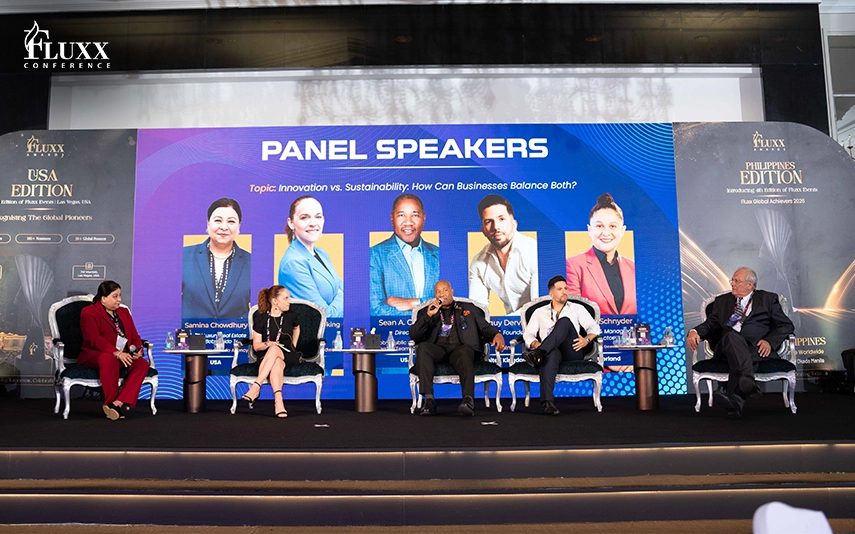
FLUXX Conference is designed to include keynote presentations, panels of experts, networking, summits focused on innovation, and executive leadership rounds. Hosting seems to be happening in Phuket, Thailand for the next few days, from December 7-11, 2026 and upcoming 2027 ones will be held in New Delhi, India (March) and Florida, USA.
Conclusion
By linking each priority to a measurable outcome for the business, CEOs can improve the effectiveness of their strategic planning. Plan and evaluate the value of your investment in AI, practice contingency planning, invest wisely, and match hiring and training with company objectives. Executives leave a conference with new business relationships to build, decisions to make, and questions to decide on. Reviewing FLUXX Conference's official agenda can help leaders identify relevant discussions and networking opportunities for their planning priorities.
FAQs
1. What should CEOs prioritize at strategic planning conferences in 2027?
AI strategy, risk management, capital allocation, workforce planning, market expansion, and innovation should be the top priorities for CEOs.
2. Why is AI an important strategic planning topic?
AI can impact any of these areas: productivity, operating costs, customer experiences, and competitiveness. Leaders should have clarity on investment criteria and set measures of success.
3. How can conferences help to grow businesses?
Working with expert panels and networking can serve to bring executives new ideas, new strategies, new partnerships, and new market expansion strategies.
4. What should CEOs look for when choosing leadership conferences?
Review the agenda, speakers' know-how, the importance of the content to the business, networking, and usefulness.
5. How to ask executives for information regarding the FLUXX Conference?
Check our website for published FLUXX summits, our agenda, our executive leadership discussion, and confirmed event announcements.
Interesting Reads:
How Can CTOs Balance Innovation Security and Enterprise Technology Costs?
