

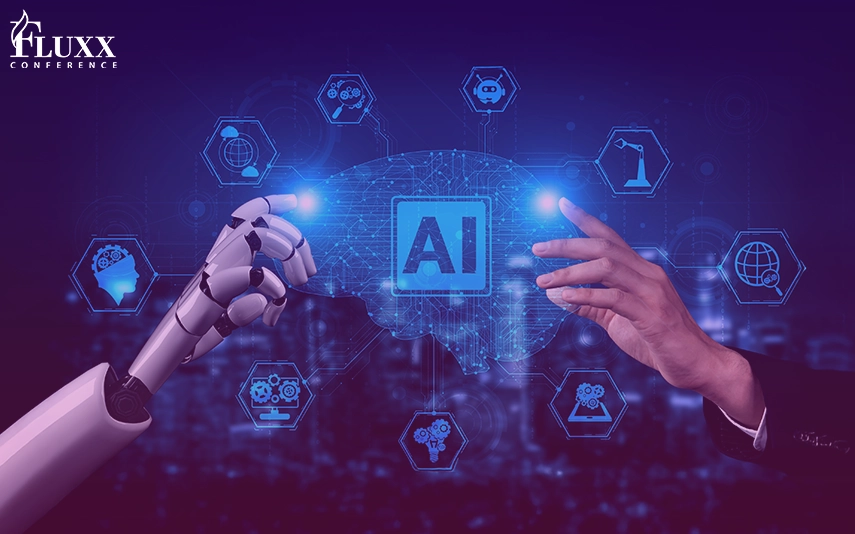
Artificial Intelligence Supercomputing Computations and Future-Gen compute Archs
Artificial intelligence no longer requires improvements in better algorithms to innovate. It has now become heavily influenced by the strength, design and intelligence of the computing systems it is supported by. Traditional computing infrastructures are becoming bottlenecks as AI models grow larger, increasingly complex and increasingly data-hungry. It is here that AI supercomputing spaces and next-generation compute architectures come in to transform the way organizations train, process data, and discover the insights at scale never before seen.
The emergence of AI Supercomputing Platforms
AI supercomputing systems are specifically built machines which are intended to support the extreme computing tasks. These platforms are built with the specific workloads of AI, including deep learning training, large-scale inference, and real-time analytics in contrast to conventional high-performance computing (HPC).
On the most basic level, AI supercomputers combine the massively parallel processing, high-speed interconnect, and advanced accelerators. This combination enables them to execute trillions of parameters at high efficiency and lessen latency and power utilization. To enterprises, research institutions and governments, these platforms are no longer a luxury, but a baseline of remaining competitive in an AI-based world.
Reasons Why Traditional Architectures are no longer a Sufficiency
Traditional CPU-based architectures were aimed at sequential processing. They are very powerful but not designed to support the parallel workloads of the current AI models. The traditional systems are expensive since training a large language model or running complex simulations can take weeks or even months, which prevents innovation and raises operation costs.
Next-gen compute architectures fill this gap with a redefinition of the interface between compute, memory and networking. These architectures are not based on adapting AI workloads to legacy hardware; they are built on the requirements of AI.
Important Building Blocks of Next-Gen Compute Architectures.
1. Accelerators Beyond CPUs
Modern AI supercomputing platforms are made of Graphics Processing Units (GPU), Tensor Processing Units (TPU), and custom AI accelerators. These accelerators are also good at parallel computations, and are therefore suited to neural network training and inference.
2. High-Data Locality and High-Bandwidth Memory.
One of the largest bottlenecks in AI workloads is data movement. The next-generation compute designs focus on high-bandwidth memory and bring compute nearer to data. Memory-centric designs like the HBM (High Bandwidth Memory) and technology contain a great deal of latency and throughput improvement.
3. Advanced Interconnects
AI supercomputing systems are based on high-speed interconnection which enables thousands of computers to interact easily. High performance, low-latency networking guarantees that scalable training is done efficiently without affecting performance.
4. Heterogeneous Computing
Instead of using one processor, next-gen architecture uses a mix of CPU, GPUs, AI accelerators, and even edge processors in a single system. This non-homogeneous strategy enables the assignment of workloads to the most efficient compute resource in a dynamic fashion.
System Intelligence and Software Matter.
AI supercomputing platforms do not solely consist of hardware. Sophisticated software stacks are also very important. The contemporary platforms support smart schedulers, streamlined AI platforms, and automation solutions that make deployment and resource management easier.
These systems are also more AI-native in nature, employing predictive analytics to drive optimal performance, manage energy usage as well as fault tolerance. The outcome is that an environment is created which is not just powerful, but also adaptive and resilient, in terms of computing.
Impact Across Industries
The impact of AI supercomputing systems and next-generation compute systems cuts across several industries:
In both instances, superior compute powers are translated into improved decisions, quicker innovation as well as quantifiable business worth.
Sustainability and Energy Efficiency
Sustainability is one of the key features of next-gen compute architectures. The larger the AI workloads, the larger the AI energy footprint is. The current AI supercomputing systems are energy-efficient devices that utilize low-energy hardware, efficient cooling methods, and smart power consumption.
This is not only cost-effective in terms of operation but also fits the global sustainability objectives- making high-performance AI more responsible and scalable.
The Future of AI Compute
Going forward, AI supercomputing platforms will keep on being more specialized, scalable, and autonomous. Further integration of AI-native chips, greater software-defined architecture, and integration between cloud and edge and on-premise systems can be anticipated.
Any organization that invests early in next-gen compute architecture will be more placed to meet future AI needs, innovate more quickly, and will cope with the faster technological change. In the AI supremacy race, the computer is no longer a supportive character, it is the stage. Visit at – Fluxx Conference
Interesting Reads:
Why Sustainable Brands are Winning Consumer Trust in 2026?
How Industry Events Help Leaders Navigate Market Uncertainty