

Digital Twins: The Nerve Center of Smart Cities and Next-Generation Manufacturing
In the world of technology, there are instances when an innovation develops discreetly and changes the world before people even realize. The digital twin falls among these innovations. From its origin as a considerably advanced engineering technique, it emerged as a mainstream strategy engine that will fuel the upcoming world. At present, digital twins are no longer limited as technologies that offer an enabled platform but instead are revolutionizing system behaviors.
Digital Twins are virtual models
A digital twin refers to a virtual representation or model indicating the dynamic operations of an actual system, process, or physical asset. The model uses data streams from various sources, including sensors and operation systems, to simulate the operation of a given asset within a physical environment. Unlike simulations, digital twins develop and improve continuously as they learn and adapt.
From machines on a production floor to traffic patterns in an urban area, digital twins enable living models that simulate reality and make better predictions and quicker actions.
Smart Cities from a Grassroots Perspective
A smart city consists of intricate interlocking elements involving utilities, transport, security, and infrastructure. However, it is precisely these intricate interlocking elements that significantly hinder a city from responding effectively and efficiently to changes. The digital twin plays a pivotal role and acts as an intelligence layer that integrates it all.
1. Improving Urban Planning and Infrastructure
The digital twin enables the planners to visualize city development before making changes. They can make analysis simulations based on what effects a new road, bridge, or transport system will have on traffic, pollution levels, and the population. Planners do not make decisions based on guesses. They rely on facts to support their decisions.
2. Improving Traffic and Mobility Systems
By digital twin technology, cities are able to have a preview of traffic congestion. The authorities can then eliminate congestion on the road by addressing road bottlenecks and optimizing traffic signal timings and so forth. All these are done because they have a digital twin replica of the transport system.
It leads to easier travel, less effect on the environment, and convenient travel times for the citizens.
3. Enhancement of Sustainability and Energy Efficiency
A digital twin city would assist in monitoring energy usage, quantifying the impact of climate on various factors, and optimizing resource allocation. It will enable very specific planning with regards to adoption of renewable sources, water savings, and environmental observation.
It establishes with technology a foundation for a resilient world with an increasingly sustainable focus.
Creating a New Era for Next Generation
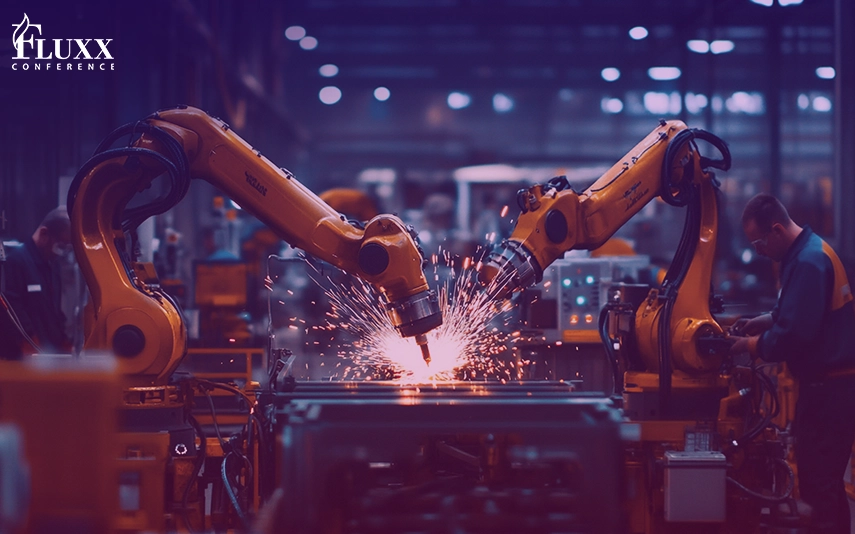
Manufacturing has ever been driven by precision, speed, and consistency. But with the onset of digital twins, a new era is emerging for the industry – an era wherein factories will be able to think, adapt, and optimize.
1. Smarter Production and Process Optimization
Digital Twins exactly replicate entire production lines, making it possible for production engineers to analyze changes and settings within processes and machines as well as product variant combinations without any downtime at line of production.
Whether it’s autos, electronic components, aerospace, or consumer products, manufacturers can carry out an endless number of virtual experiments before making changes on the production floor.
2. Predictive Maintenance and Asset Reliability
As opposed to traditional maintenance methods, which were usually done as per schedule and not as per need. The digital twin technology changes all that with predictive capabilities. Companies can check their equipment at an actual operating level and predict impending failures and thus conduct maintenance as per need.
The impact: fewer failures, lower repair prices, and a significantly prolonged useful life.
3. Product Development and Quality Enhancement
The use of digital twins enables businesses to develop a product digitally and optimize it before physical products have been created. The innovation reduces product development cycles with regard to stress testing and performance with very few mistakes.
Moreover, digital twins will improve quality control because these will enable comparisons between virtual ideal models and actual production outputs to make sure that all products conform with set standards.
Connecting Cities and Sectors to a Common Digital Future
It can be an ecosystem and an industrial setting; all benefits clamor unto three things: efficiency, agility, and informed decisions.
Smart cities are more intuitively engaged. Indestructible industries are more resilient, productive, and efficient. The inhabitants and customers get optimum services and superior products. As IoT continues to grow, Artificial Intelligence advances, and 5G networks accelerate connections, digital twins will increasingly become more intelligent and more deeply integrated. Their usage will expand beyond visualization and simulation, and into autonomous decision-making and even into creating the very fabric of our digital world.
Final Thoughts
Digital twins are no longer concepts that will exist in some distant, futuristic world. Digital twins are shaped up as “the spine” within a ‘smart city’ and “the next generation” within a ‘factory’, as they have the ‘capability’ to predict an ‘outcome’, ‘optimize’, and ‘innovate’. It is these ‘organizations’ and ‘governments’ that will ‘shape up’ an ‘intelligent’ and ‘sustainable’ ‘tomorrow’. Visit at – Fluxx Conference
Interesting Reads:
Quiet Leadership: Why Empathy, Listening, and Humility are the New Power Skills
Leadership for Innovation: Building Teams That Experiment Fearlessly