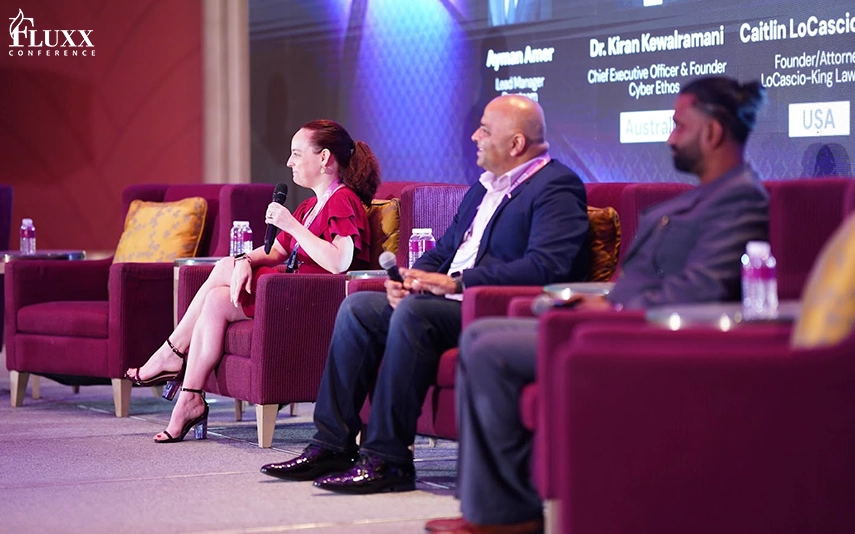
Summary: AI is changing the face of business, but achieving sustainability still requires human input. CEOs and CXOs who leverage AI through empathy, transparency, ethical leadership, and lifelong learning will foster innovation while avoiding any dilution of integrity or corporate culture. In doing so, these leaders make their organizations stronger by using AI not to substitute for human talent but to maximize it.
AI is no longer found in the innovation lab; AI finds its way into the boardroom, determines the company’s strategic priorities, and affects decision-making in operations, finance, customer service, and human resources. The question for today’s business world is not “Should I use AI?” but rather “How do I integrate AI without undermining the resilience of my organization?”
This has become the main topic at business leadership conferences in 2026, as executives talk about how to achieve a good balance between automation and human-centered leadership. The organizations that will come out successful are not necessarily the ones with the best technology. Rather, they are those whose leaders know that technology transforms processes and people transform transformations.
Organizations that have strong change management skills tend to succeed with their AI endeavours. The key here is not how much the company invests in technology, but the actions of its leaders. CXOs need to learn to communicate well and encourage learning from the start.
The future is for those who can blend machine intelligence with human wisdom.
The Real Risk Is Not AI, It Is Disconnection
In such cases, an organization becomes obsessed with choosing the appropriate software, deciding what needs to be automated, and looking for measures of efficiency. On the other hand, employees will have their own way of experiencing such changes. For example, they will be interested in whether they are needed.
If these queries go unresolved, resistance will quietly mount. Work may be more productive in the immediate term, but engagement and collaboration will suffer, and innovations will slow down. AI will become synonymous with uncertainty, not improvement.
That’s why many talks in international business forums in 2026 revolve around organizational trust being a critical resource. Technology can help with workflow optimization but not with creating psychological safety; it’s leaders who provide this environment through open communication.
It is just a matter of changing the way the message is phrased that makes all the difference. Where the first statement says, “AI will take care of repetitive jobs,” the better leader states, “AI will cut down administrative work to enable our teams to deal with more complicated challenges, service clients, and come up with innovative solutions.”
Start With Purpose Before You Start with Tools
The most powerful applications of AI start with a business problem rather than a technological one. CXOs must first state the purpose behind what they’re trying to do before even considering a platform or automation strategy.
Answer three questions:
What business problem are we solving? How will AI enhance the employee or customer experience? Which human skills become more valuable through automation?For example, an organization in customer support might deploy AI to handle standard queries. But, of course, this is not all about cutting costs. This is about allowing the customer support team to concentrate on meaningful engagements that involve emotions, negotiations, and relationship building. When employees realize that AI improves their effectiveness, adoption happens organically.
A purpose-driven approach would be highly applicable for startups and growing businesses attending entrepreneurship conference 2026 events, since it can be easy to forget the need to develop organizational culture during scaling up.
Purpose leads to alignment. Alignment leads to momentum.
Human Judgment Remains the Competitive Advantage
It is great at analyzing information, spotting trends, and giving advice. But it is not good at understanding political dynamics within organizations, clients’ emotions, cultural subtleties, and strategic trade-offs, as human leaders do.
Imagine an example where AI suggests reducing the number of support employees since fewer calls are received now. This decision looks perfectly reasonable from an analytical perspective. A human leader will be able to see the increased irritation of the customers because of complicated products and that the move is going to hurt the retention rate.
This is why CXOs consider AI a decision support system, not a decision-making system. They always urge their teams to critically analyse the results delivered by the AI and question all assumptions made while considering its implications for the entire organization.
The concept of using AI insights with human judgment is gaining more importance in contemporary executive leadership and has become an important part of global leadership discussions.
Build Trust Through Radical Transparency
Leaders do not have to know everything, but employees expect truthfulness.
During the implementation of AI solutions, transparency is critical due to uncertainty, which will rapidly spread across the company. It is essential for CXOs to tell their staff:
What processes will be automated? Why these processes were chosen? What skills will be required now? How performance appraisal will change? What help will be available during this process?Conducting town halls, Q&A sessions, and cross-disciplinary workshops creates chances for dialogue rather than monologue. Asking challenging questions of leaders is an indication of confidence and respect for employees.
People become comfortable with AI technologies when there is clear direction from leadership and opportunities to test the technology without risk. The trust develops because people get involved in the change process instead of becoming a part of it.
Reskilling Is a Leadership Responsibility
The greatest blunder made by organizations is believing that people will automatically get used to working with AI. It demands investment.
Visionary CXOs consider reskilling an important strategic issue. They develop learning paths that consist of:
AI literacy for all workers. Analytical skills for managers. Training in prompt engineering and automation. Ethical AI. Critical thinking and problem-solving skills.The objective is not to make every employee an expert in data science. The objective is to make everyone aware of the impact of AI on their job and how to leverage it.
It shows a strong commitment to employee growth rather than using technology to replace them.
Several executives who have spoken about their experiences during business leadership conferences 2026 point out that reskilling programs bring in several unintended advantages. They make employees more motivated, foster collaboration across departments, and promote innovation since people become more confident using new technologies.
Protect the Human Moments That Matter Most
As AI starts taking over more routine work, the interactions left for humans become increasingly crucial. The CXO must recognize these situations when empathy and connection will make a disproportionate impact on the outcome.
They are:
Performance & career discussions Conflict management Customer escalation situations Strategic partnerships discussion Innovation sessions Leadership coachingNo algorithm can substitute for the value that a leader brings through their ability to listen, understand the emotional background, and assist in dealing with ambiguity.
One way to think about this is always to ask, “Will the customer or employee feel more respected by human involvement in this process?” If yes, then make the human your focus and use AI only to support with relevant insights.
This approach is increasingly being debated at international business conferences in 2026 as companies rethink their customer experience approach in an AI world.
Create Ethical Guardrails Early
AI leadership must not come in after the fact. Customers, employees, investors, and regulators are all looking closely at the way companies handle data and automation.
CXOs need to put in place governance frameworks that address:
Data privacy Bias detection Human oversight Responsibility for AI decisions Ethical concern escalation processesThese serve as safeguards for the corporation against reputation and legal issues while strengthening the trust bond with stakeholders.
This trust is still one of the greatest indicators of organizational success. Organizations that exhibit proper technology practices are more likely to attract customers, employees, and investment.
The CXO of the Future Is Part Technologist, Part Humanist
The future leaders of organizations will not be judged on how technologically savvy they are. They will be judged on how well they can enable people to flourish through technology.
The best CXOs of the future will:
Leverage AI for better decision-making. Be constantly investing in the development of their employees. Communicate with transparency. Retain empathy in their approach to leadership. Form ethical governance systems. Encourage experimentation and trust.These leaders recognize that while AI redefines the essence of work, the essence of being human remains the same — a need for purpose, acknowledgment, and engagement.
In preparing for the next phase of transformation, the question has evolved from “How can we implement AI?” to “How can we become a more capable and adaptable human organization using AI?”
And it’s precisely that evolution that defines the difference between automation and business transformation.
For business leaders who wish to navigate such leadership challenges, forums like CXO Summit Phuket 2026 offer a chance to interact with their peers from around the world, draw lessons from real-life stories of transformation, and gain insight into how to lead the adoption of AI without losing sight of humans.
Cross-Functional Collaboration Creates Better AI Outcomes
When AI projects get stuck in technical departments, they usually fail. Each department can offer a distinct point of view, helping with project execution.
For instance:
HR can know what worries the employees and how to train them. Marketing will be aware of customers and brands. Finance knows how valuable the initiative will be for business purposes. Operations will know how the processes can be optimized.When all these points of view converge, companies will be able to take more balanced decisions and avoid any risks in implementing them.
Such cross-functional collaboration is what will keep AI from being yet another siloed technology initiative. Instead, it will serve as a complete business transformation that aligns with the company’s strategy.
This model of collaborative leadership is still gaining popularity among attendees at business leadership conferences in 2026.
Looking Ahead: The Next Chapter of Executive Leadership
Mature thinking about AI is here now. Businesses no longer debate whether AI should be part of business. Instead, they debate how to implement AI technology in ways that maintain their core values as businesses.
CXOs of tomorrow won’t win glory just for introducing cutting-edge technology into their businesses. They’ll win glory for creating businesses where innovation makes people better, leaders inspire trust, and technology has a clearly defined role.
As industries change, executives need platforms to share their ideas, discuss what they believe, and learn from real-world transformation experiences. Platforms such as the Entrepreneurship Conference 2026 and CXO Summit Phuket 2026 have brought business leaders together to discuss these issues.
Conclusion
AI has disrupted all sectors of work, but the potential it can unleash fully hinges upon the quality of leaders. The CXOs who will make people their focus when implementing AI technologies will create organizations that are better innovators, more robust, and ready to succeed in the future.
It’s not a question of whether we’ll go with artificial intelligence or human intelligence. It’s how to make both coexist successfully.
Through the communication of a vision, continuous learning, cross-functional collaboration, ethical governance, and empathic leadership, executives build businesses that are innovative while retaining the human elements that make them trustworthy and successful.
CXO Summit Phuket 2026 is one such forum where CXOs can benefit from useful perspectives, share ideas with international professionals, and learn approaches to leadership that keep humanity at the core of digital transformation as discussions on responsible AI take shape.
FAQs
1. Why is the human factor vital in adopting AI technology?
It creates trust and collaboration, and ensures that technology works for people, not against them.
2. What is the role of CXOs in the successful introduction of AI technology?
CXOs provide a clear strategy, develop a learning culture, and ensure that AI works in line with company objectives and values.
3. What measures should an organization take to minimize employees’ resistance to AI?
Clear communication, reskilling programs, and engaging employees from the very beginning of the transformation process will create trust.
4. Can AI become a substitute for a leader’s decision?
No, AI offers good insights, while a human leader offers wisdom, empathy, ethics, and strategy.
5. How can executives stay informed about AI leadership trends?
By participating in executive forums, such as CXO Summit Phuket 2026, executives can get practical knowledge.
Interesting Reads:
How CXOs Are Building Security-First Organizations in an AI-Powered Era?
Executive Conference Thailand 2026: Where Global Leadership Meets Innovation