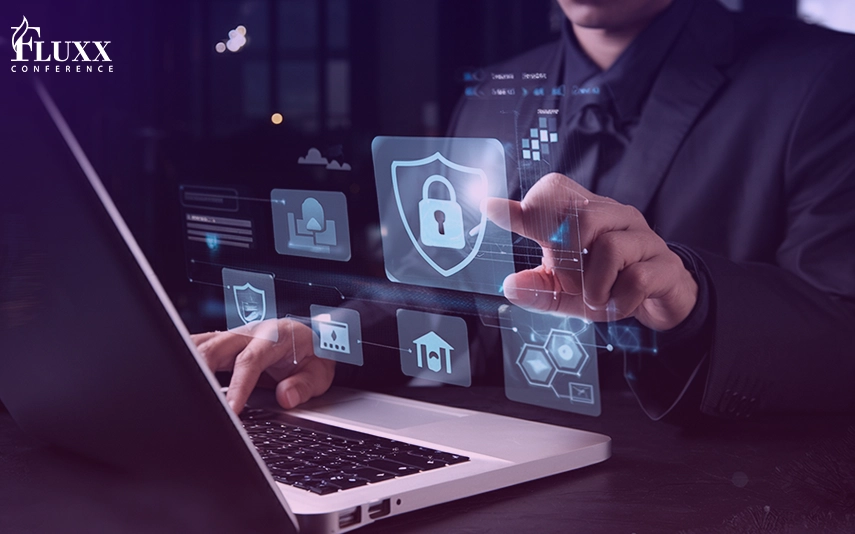
The workplace is no longer on the inside of office buildings–it is traversing home networks, Wi-Fi of coffee shops and cloud ecosystems. This change has not only transformed the dynamics in which organizations are run but in their defence mechanisms as well. Since remote work has evolved beyond a short-term fix into a long-term system of business, cybersecurity has ceased to be an IT task and has transformed into a business concern.
The key question of this evolution is this: how can you have an everywhere-operating workforce?
The Emergence of Zero Trust Architecture
Among the most outstanding IT trending topics of cybersecurity in this age of remote work, the extensive scene of Zero Trust Architecture (ZTA) should be brought up. The old types of security models used to assume that all within the corporate net could be trusted. That no longer is the case.
Zero Trust is based on a strong yet simple principle: never trust, always verify. The process of every user, device and application continuously authentication prior to accessing resources. This would ensure that chances of an unauthorized intrusion are reduced especially when employees are connected to unsecured or personal network.
To apply Zero Trust policies efficiently, organizations are adopting identity-based access controls, multi-factor authentication (MFA) and micro-segmentation.
End-point Security with a Decentralized Workforce
Remote work has made the attack surface very large. Every employee device either a company laptop or a personal smartphone turns into a potential source of cyber threat.
Contemporary endpoint security is more than the traditional antivirus programs. It has Endpoint Detection and Response (EDR) solutions that involve the use of behavioral analytics to identify the anomalies in real time. Such tools can help IT departments to detect and contain threats before they develop into full-blown breaches.
As employees are not working in centralized settings, endpoint visibility is no longer a luxury, it is now a necessity.
Cloud Security Comes to The Forefront
Remote work is supported by cloud computing. Everything hosting collaboration tools, data storage and enterprise applications are hosted in cloud environments. Although this increases flexibility, new vulnerabilities are also brought about.
Maladjusted settings within clouds have continued to be among the major causes of data breach. This is causing Cloud Security Posture Management (CSPM) tools to pick up. Such solutions constantly check the cloud configurations to be in compliance with the best security practices.
Email encryption and secure APIs, as well as identity control, are also important elements of an effective cloud security plan. Cloud environments require businesses to be as rigorous as they treat on-premise infrastructure–or even more so.
Phishing and Social Engineering Development
Hackers have kept pace with the remote work environment. Phishing attacks are now more advanced and usually imitate internal message or authoritative platforms.
Remote workers can be lonely and less inclined to check suspicious emails, which will make them the most vulnerable. One of the defensive layers is therefore the cybersecurity awareness training.
Companies are spending their money on fake phishing and live threat warnings to enlighten staff. Human behavior is as vital as technical defenses in the remote work world.
Secure Access Service Edge (SASE)
The other trend of importance is the introduction of Secure Access Service Edge (SASE) which is a model that integrates both network security capabilities and wide-area networking (WAN) features.
SASE provides security solutions – secure web gateway, firewall-as-a-service, and zero trust network access, in the cloud. This provides the same level of security irrespective of the location of users.
In the case of distributed teams, SASE offers a cloud-scaling and efficient method of keeping security without the use of traditional infrastructure based on perimeter.
Challenges of Data privacy and Compliances
Telecommunicating makes it difficult to comply with regulations. Data can be accessed, processed or stored in more than one jurisdiction, complicating privacy.
Organizations need to be compliant with regulations, e.g., GDPR, HIPAA, or industry-specific standards. This calls for solid data governance policies such as data classification, access controls and audit trails.
The consequences of noncompliance would not only subject businesses to legal liabilities, but also to loss of trust, which is a valuable asset that is hard to win.
Creating a Security-First Culture
Cybersecurity is not a sole problem that can be addressed using technology. To achieve this, organizations need to inculcate a culture in which security is an integral part of their day to day operations.
These involve routine training, effective communication and participation of leadership. Employees ought to know their part in securing organizational assets, be it using tough passwords or realizing suspicious activities.
The security-first mentality reshapes cybersecurity as an application of a reactive approach into a proactive, strategic initiative.
Conclusion
Remote work has changed the cybersecurity landscape forever. Organizations need to stop using conventional thinking/modelling and shift to adaptive, intelligence-based methods when reducing risks.
The cybersecurity IT trending topics in the remote work era represent a definite shift towards making security dynamic, integrated, and user-centric: Zero Trust frameworks, AI-driven defenses, and more.
Companies that adopt these trends will not only safeguard their online resources but also gain resilience in an ever more uncertain world. Visit at –
Fluxx Conference
Interesting Reads:
Leadership Pipelines: Readying Tomorrow Executives Today
Beyond Solar Panels: Floating Wind Farms and Solar Glass